Advanced Technologies Promise To Transform Grinding Efficiency, But The Industry’s Most Significant Optimization Potential Still Lies In Process Knowledge, Operational Fundamentals And The People Who Understand Them.
By Jonathan Rowland
Turning larger particles into smaller ones sounds simple, but the reality is far from it. The cement industry has no shortage of technologies that promise grinding circuit optimization. AI-driven process control, online particle size distribution (PSD) measurement, real-time strength prediction and advanced classifiers: the tools are available and, in many cases, proven. Yet across the cement sector, the gap between what is technically possible and what is operationally achieved remains stubbornly wide.
If the reasons for this are not technological, we must look elsewhere for an explanation, considering human and organizational factors. A shortage of experienced process engineers, the siloing of process expertise and a tendency to pursue advanced solutions before the operating fundamentals are secured all risk leaving significant performance gains on the table. As Thomas Holzinger, CEO of Holzinger Consulting, puts it, “You cannot optimize your F1 car with three tires or a flat one.”
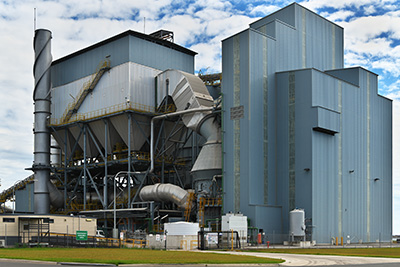
Optimizing grinding circuits thus demands a holistic understanding of how feed materials, equipment, classification and process control interact. However, that understanding, the experts I spoke to agreed, is increasingly difficult to find: the grinding circuit – whether a ball mill, roller press, combined circuit, vertical roller mill or other proprietary systems such as the Fives FCB Horomill technology – is simply not well understood anymore.
Holzinger was blunt in his assessment of the root cause, pointing to a decline in process education. And, while the industry has been moving toward automation and AI, these tools only help once systems are understood and under control. Automation, he argued, is only as good as the system’s mechanical and process status.
Sven Rathgeber, the senior engineer and lead for AI Process Optimization at Gebr. Pfeiffer, was more nuanced. The understanding within companies is generally good, he argued, but translating that knowledge from process departments to the operators who run equipment day to day remains a persistent challenge.
Staff turnover, varying skill levels among operators and the difficulty of knowledge transfer all erode performance. And, given the high throughput and energy consumption of grinding circuits, even small missed potential leads to significant lost value over time.
Getting The Basics Right
Equipment availability is a case in point. In a world where maintenance budgets are continuously squeezed, Holzinger highlighted net availability (NAI) as critical. For ball mill systems in particular, starting, stopping and restabilizing requires time, and a low mean time between failures (MTBF) increases the proportion of operation spent in these inefficient periods.
The correct feed to a grinding system, he added, should be addressed during the plant design period, but in many plants built over the last decade, this has not been properly considered. Changing material flows after the fact is difficult and expensive.
Rathgeber agreed that the basics do not receive enough attention but framed the problem as one of competing priorities. Plants must balance market demand, customer satisfaction, energy availability and pricing, all of which limit the resources available to address operational fundamentals. As the Gebr. Pfeiffer engineer observed, “modern technology, such as AI optimization, will not help if the underlying problem is equipment failure.”
Getting those fundamentals in place requires a structured and progressive approach, according to Jean-Philippe Tonnelier, customer services director at Fives FCB. When supporting producers with grinding optimization, particularly where budgets are tight and internal expertise is limited, the company generally recommends beginning with a comprehensive diagnostic of the grinding circuit that combines operational data analysis, equipment assessment and material characterization.
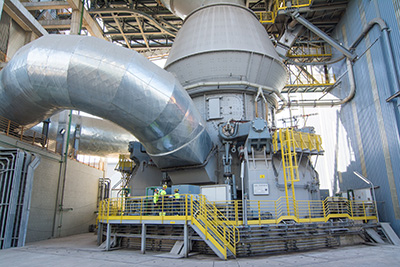
Industrial laboratory testing, including grindability measurements, provides essential insight into how clinker and supplementary cementitious materials (SCMs) influence grinding efficiency and separator performance.
Beyond diagnostics, Tonnelier continued, is improving operational legibility. Many grinding circuits still operate with limited information about key parameters such as separator performance, airflow balance or mill operating conditions.
Complementary instrumentation and robust data acquisition systems can significantly enhance the understanding of circuit behavior. Equally important is the quality control loop. According to the Fives FCB expert, representative sampling of finished cement is essential to ensure that laboratory measurements accurately reflect the product leaving the circuit and to avoid biases creeping into operational adjustments.
These foundations, Tonnelier argued, are prerequisites for any targeted optimization of mill operations and classification efficiency, as well as for the advanced measurement technologies that sit above them.
The Measurement Frontier
If operational fundamentals form the base layer of optimization, online measurement technologies represent the next step, but one that demands stable, well-understood processes to deliver value. According to David Alós-Shepherd, head of business development at AI specialist, Alcemy, technologies for online PSD, chemistry and real-time mineralogy have matured significantly.
“They are no longer experimental,” he said, “and work reliably when implemented well and consistently used.” What the industry lacks, however, is broad adoption. “A handful of plants have taken a pioneering role and are demonstrating what is possible, but many others still operate with limited real-time visibility into their product.”
The same applies to predictive tools such as real-time strength estimation. Alós-Shepherd noted that the capability to connect process data to product performance is far more direct today, but, again, “rollout across the industry has been slow.”
Faster adoption would help plants shift from controlling grinding through indirect metrics to controlling it based on expected product performance as it is being produced, he continued: a shift that allows mills to respond more confidently to changes in clinker quality, SCM variability, or gypsum behavior and reduces the conservative trial-and-error approach that still characterizes many operations.
Holzinger is another (if nuanced) advocate for online measurement. For example, online PSD measurement is valuable, he said, even in struggling systems, which would benefit from keeping the PSD stable through multiple stoppages.
On strength prediction, he drew a distinction between systems that rely on historical plant data and those that measure clinker phases and oxide chemistry directly at the mill. The latter approach, he believes, has advantages for grinding stations handling variable clinker qualities or plants with large clinker storage, where the composition entering the mill is never entirely certain.
These tools enable faster adaptation to quality and composition targets and can unlock the final optimization percentages, either saving electrical energy or reducing CO₂ by adjusting composition and lowering the clinker factor.
Tonnelier, meanwhile, emphasized the importance of what lies beneath the measurement technology. The quality of decisions, he said, can never exceed the quality of the measurements on which they are based. Reliable and relevant instrumentation, representative automatic sampling, and a solid understanding of material behavior supported by grindability testing and process expertise are all prerequisites. When these foundations are in place, he said, “AI-based systems can become powerful tools that support operators through advanced process analysis and dynamic setpoint recommendations.”
What Comes First?
What, then, must be in place before AI or predictive analytics can deliver real value? Alós-Shepherd identified two foundations. The first is technical. Feeders need to be accurate, sensors calibrated, and the automation layer stable – but equally important is clean, well-structured and accessible data.
Many plants struggle not with the measurements themselves, but with how data is stored, labeled or shared across systems. If key signals are missing, inconsistent, or siloed, even the best model will underperform. “Good data management,” he said, “is now just as critical as physical instrumentation.”
The more important foundation, according to the Alcemy expert, is the human one. Operators and engineers need to feel confident using these tools every day. They must understand what the models are telling them, how to interpret recommendations, and when to intervene. Without that familiarity, “even high-quality analytics often sit on the sidelines.” Training, repeated exposure, and a culture of collaboration between digital and process teams are essential.
Rathgeber noted that the instrumentation on a modern mill is generally sufficient to implement advanced tools, though additional sensors can further enhance its potential. The bigger barrier is often more basic: “equipment needs to be capable of automation before it can be automated!”
Plants should also gradually build up automation, the Gebr. Pfeiffer expert continued. A plant does not need to jump from manual control to full automation in one step; working with the mill manufacturer to develop a staged plan is more realistic and more effective. “A modular, flexible approach typically leads to more stable production, fewer stops, and higher overall output,” he said. “AI-driven optimization is only the next step if the plant has already got the fundamentals in place.”
Similarly, Alós-Shepherd advocated maximizing the value of existing equipment before investing in new hardware. The biggest improvements, he said, usually come from better control and better information, not from new machines.
Where AI Should Fear to Tread
On the question of where the boundary lies between human expertise and automated control, there is broad agreement that automation handles the fast, repetitive decisions well, such as stabilizing the mill, controlling PSD and compensating for normal disturbances. This is especially true as the day-to-day tuning of cement blends becomes more complex with the increasing use of SCMs, Alós-Shepherd argued. But the deeper process insight remains firmly in the domain of experienced engineers.
Holzinger was emphatic on this point. Ball charge design in a ball mill cannot be automated. Adaptation to changing feed sizes and different SCM requirements must be done by a process expert. Wear and performance adaptation on vertical mills needs a process expert.
And from the design stage onward, process expertise on the plant side – whether in-house or from an independent consultant – is essential to ensure alignment between the plant’s needs and suppliers’ offerings. Then, there is the question of how to respond in those (hopefully, rare) moments when the plant behaves “in ways no model has encountered before,” added Alós-Shepherd. Given all this, “there is no replacing expert operators and process engineers yet.”
The challenge, Rathgeber concluded, is not knowing how to build an AI system, but that you need both process understanding and digital capability to build a system that works. Or, as the Gebr. Pfeiffer engineer put it: “You need process engineers who learned to build an AI, not AI people trying to understand the process.” In this context, Holzinger’s closing advice centered on people. Even in a cement industry of constrained resources and ever-pressing challenges, producers should “keep process experts and engineers at the center, investing in them as future leaders.”